
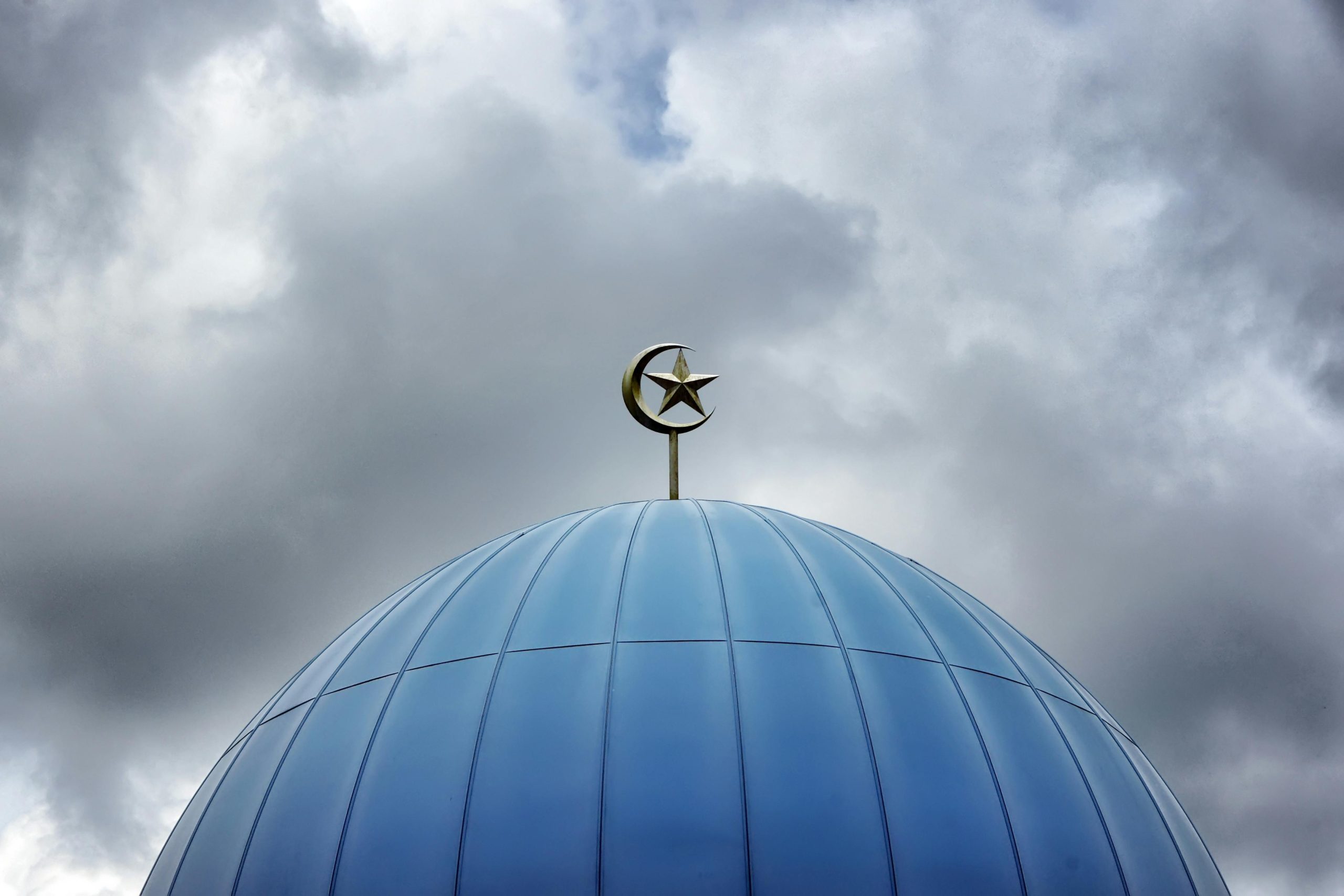
Crescent and Star: Meaning and History in Islam
The crescent moon and star are common symbols of Islam. Many people see this design on flags of Muslim countries or with the Red Crescent, a group that helps communities in the Muslim world. But what do these shapes really mean?
Islam lacks an official emblem similar to the Christian cross. The crescent and star predate Islam by many centuries. Their association with the faith developed gradually through historical events, cultural influences, and powerful empires. This connection was not established by the Qur’an or Islamic doctrines.
This guide provides a straightforward explanation of the symbol, detailing its appearance. It also explores its origins and the various interpretations that individuals attribute to it. Lastly, it examines how this symbol is utilized in the contemporary Muslim community.
What the Islam Symbol Looks Like
The typical Islam symbol includes two main shapes:
- A crescent moon, usually a waxing crescent.
- A five-pointed star, placed beside or inside the crescent.
What the Crescent Represents
Many people say the crescent stands for growth, new beginnings, or progress, since a waxing moon grows brighter over time.
What the Star Represents
The star is often seen as a sign of guidance, light, or knowledge, similar to how stars guide travelers at night.
Some people claim the star’s five points represent the Five Pillars of Islam, but scholars explain that this is a cultural interpretation, not a religious rule.
No Official Religious Meaning
The Qur’an does not mention any symbol representing Islam. Still, crescent and star shapes appear widely in Islamic art, patterns, and architecture across the Muslim world.
The Ancient Roots of the Crescent and Star
The crescent and star existed long before Islam. Ancient empires in the Middle East used moon and star symbols in art, coins, and royal seals.
Persian and Byzantine Use
The Persians used crescent-and-star shapes in the Sassanian Empire. Coins from this period show a star inside a crescent.
The old city of Istanbul—known in the past as the ancient city of Istanbul instead of the more complex historical name—also used a crescent symbol by the 4th century CE.
During the Prophet Muhammad’s Era
In the 7th century CE, early Muslim communities did not use any symbol. Their banners were simple: solid colors such as black, white, red, or green. No images were displayed.
How the Crescent and Star Became Linked to Islam
The strong connection between the crescent star and Islam grew during the rise of the Ottoman Empire.
The Ottoman Influence
The Ottoman Empire ruled huge Muslim regions for many centuries. As their power expanded, the crescent and star appeared on their flags, military banners, and government buildings.
A popular story says Osman I, founder of the Ottoman Empire, dreamed of a crescent stretching across the world. Whether true or not, the Ottomans adopted the crescent-and-star design, and it became central to their identity.
Because the Ottomans controlled large Muslim lands for hundreds of years, the symbol spread widely and slowly became tied to Islamic identity.
Cultural Meaning of the Islam Symbol Today
Although the crescent and star do not come from scripture, they hold strong cultural meaning for many Muslims.
In Mosques and Architecture
Many mosques place a crescent on top of domes or minarets. Moon and star motifs also appear in building designs, tiles, calligraphy, and metalwork.
In Festivals and Community Life
During Ramadan and Eid, homes, streets, and shops are decorated with crescents and stars. These shapes appear on lanterns, banners, greeting cards, and lights.
In Art and Design
Islamic art is full of geometric star patterns and moon shapes. They appear in carpets, wall décor, ceramics, and jewelry.
These uses show how deeply the symbol has entered Muslim culture, even if it is not a religious requirement.
How Muslims View the Crescent and Star
Muslims today have different views about the crescent-and-star:
1. Many Accept It Culturally
For many Muslims, the symbol represents unity, identity, and heritage. Seeing it on a flag or mosque brings a sense of belonging.
2. Some Avoid It
Some Muslims prefer not to use the symbol because it did not exist during the Prophet’s time and has no religious basis.
3. Others Prefer Alternatives
Popular alternatives include:
- The Kaaba symbol
- Arabic calligraphy, especially phrases like “Allah” or “Bismillah”
- A simple mosque silhouette
These alternatives focus on religious meaning rather than cultural history.
Modern Uses of the Crescent and Star
The Islam symbol appears in many modern settings.
National Flags
Several Muslim-majority countries use the crescent and star on their flags, including:
- Turkey
- Pakistan
- Malaysia
- Tunisia
- Algeria
- Maldives
These flags reflect both cultural identity and historical influences.
Mosques and Islamic Centers
Crescents often appear on top of mosques around the world, serving as a decorative feature that signals the building’s religious purpose.
Aid Organizations
The Red Crescent uses a crescent symbol on its medical tents, vehicles, and uniforms in Muslim-majority regions.
Media, Marketing, and Decoration
During religious seasons, crescents and stars appear in:
- Television graphics
- Posters and social media banners
- Festival decorations
- Business advertisements
These symbols have become a visual shorthand for Islamic culture.
Why the Islam Symbol Matters
Even though the crescent and star do not come from scripture, they play an important role in cultural identity.
A Sign of Unity
The shapes connect millions of Muslims across different countries and cultures.
A Bridge Between History and Today
They link ancient civilizations, the Ottoman legacy, and modern Muslim communities.
A Visual Language
The crescent and star offer a simple way to represent Islamic traditions in art, celebrations, and global media.
Conclusion
Islam’s true symbols are not just images or shapes. They exist in the beliefs, values, and lively communities of the Muslim world